My friend Ken Wheeler asked me if I think a homelab is worth it or if he should just stay in the cloud.
I've had two somewhat serious homelabs. One was a huge waste of money. The other has made building and running personal software so easy that I use it constantly.
So yeah, I think there's a case for it. A pretty good one, actually. You just probably need a lot less hardware than I originally bought.
I bought the whole damn rack
At my Sacramento area house, I had a 42U server rack with six computers: three Proxmox mini PCs in a high availability cluster, one running Proxmox Backup Server, and two gaming PCs that doubled as a pool of GPUs for inference. Plus a NAS, camera recorder, battery backup, remote KVMs, a Raspberry Pi running uptime monitoring, a bunch of Ubiquiti gear, and Hue lights because obviously the servers needed ambiance.
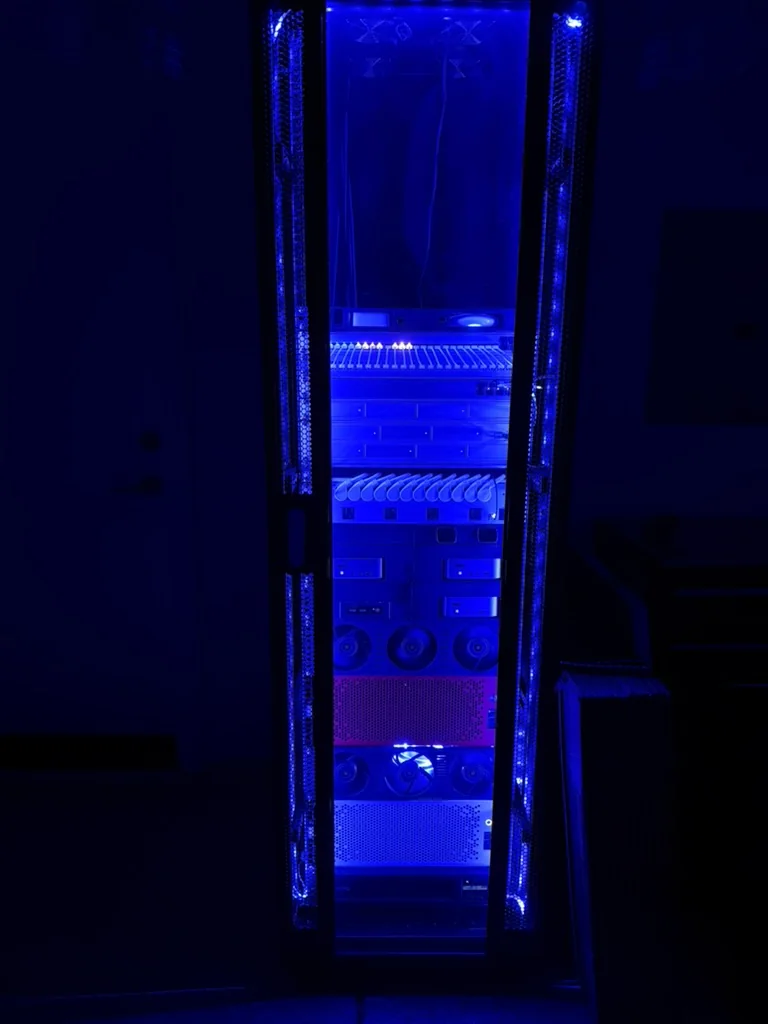
I set this up in late 2024, mostly by hand, with Claude helping diagnose things here and there. I learned a ton about networking and running highly available services. I got some useful Home Assistant stuff out of it. It was fun.
But the value relative to the dollars I put into it was very, very low. Totally defensible as a hobby. Pretty hard to defend as a practical purchase.
When we moved back to Seattle, I had no room for it and sold nearly everything. I kept the NAS, but I was done with homelabbing. It had been fun, I'd wasted a lot of money, and I wasn't going to do it again.
Later, on a whim, I bought a Framework Desktop because having some spare compute around sounded useful. I wasn't trying to rebuild the lab.
That combination has been fucking magic.
The smaller setup does more for me
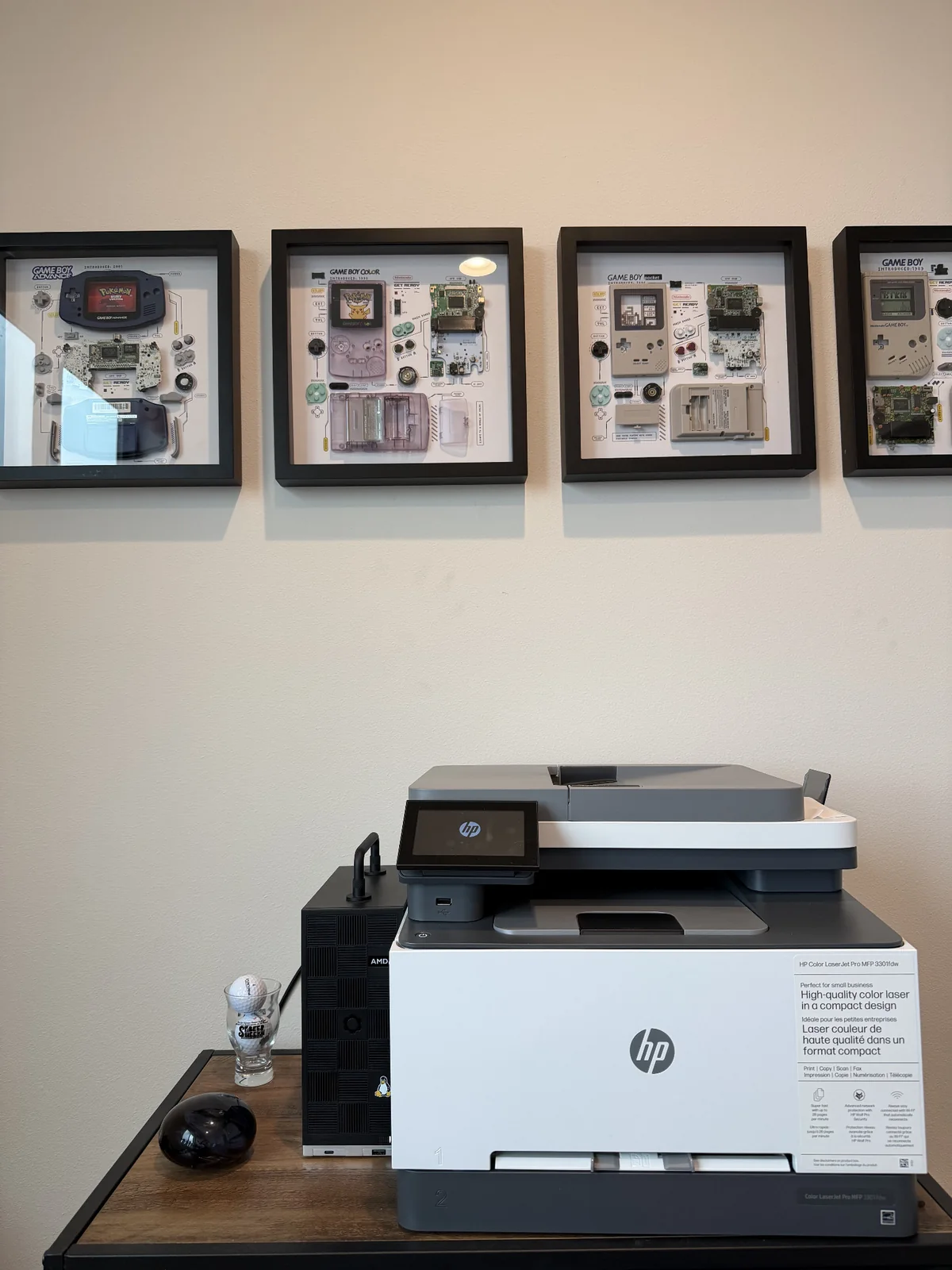
Since I know people will ask: it's a Framework Desktop DIY Edition with an AMD Ryzen AI Max+ 395, 64GB of RAM, and 1TB of storage. Now that I've used it a lot, I do wish I'd gotten the 128GB model so I could run bigger models locally. But honestly, 64GB has been plenty for what I'm actually doing.
The Framework runs small apps, local inference for easier tasks, and my remote coding sessions. The NAS handles storage and backups. Even that is overkill for what I do. I'm not an *Arr stack guy. I mostly just have backups.
The other big change is coding agents. I've used Codex, Copilot, and Claude Code for this, and all three have been more than up to the task. Things that used to eat an entire evening now often take minutes.
I have one project called command-center with the topology of my network and notes on how everything is configured. My agent keeps that updated and tracks its changes in Git. It has SSH access to the devices it needs. I run an Airbnb, so it has to ask before doing anything that could affect guest Wi-Fi. Otherwise, I give it a pretty long leash.
All the code is checked into a local Gitea instance too. I can browse it when I need to, my agent can look through old versions to figure out what changed, and I don't have a trillion tiny repos cluttering up my GitHub.
This is a big part of why I love Ubiquiti: I can have my agent SSH into the devices on my network and actually investigate what's happening. At one point my network was dropping for five seconds roughly every ten minutes. My agent SSH'd in, dug through the logs, and tracked it down to an overheating Ethernet-to-SFP+ adapter that kept resetting itself. Five minutes. That would have taken me ages.
Now, whenever I'm adding a device to my network, one of the first things I look for is SSH access. Can my agent get in there, read logs, debug it, and make it more useful? That has become a real factor in what I buy.
Why I like having this stuff at home
Networking between cloud things remains a constant pain in the ass for me. I want one little app to talk to another little app, read some files, and call a model. Getting everything connected can become its own project. Then there's the nickel-and-diming of another monthly SaaS subscription for some tiny thing I need.
At home, I throw up another Proxmox LXC, point it at the services and storage already on my network, and I'm basically done. It can reach what it needs right away. My receipt app, local models, NAS, and home devices are already there. I'm not figuring out another path between systems or deciding whether this little idea is worth another recurring bill.
The hardware and electricity obviously aren't free. I have an entire rack's worth of evidence that you can spend way too much on this. But once I have the machine, trying one more small app usually doesn't add another bill. That makes me much more willing to build something on a whim.
What I actually use it for
- Airbnb software. Expenses, cleaner notifications, check-in and checkout info, and logging the TVs out of streaming services between guests. I can text it receipts and it reads, classifies, and stores them. At year end, I get a zip of receipts and a spreadsheet for my accountants. It runs in a Proxmox container on the Framework. Something breaks? Ask my coding agent to diagnose and fix it.
- Better music recommendations. I got sick of Spotify's recommendations on a flight home from Spain and built an app on the plane. Focus music, discovery, familiar stuff mixed with adjacent music, and temporary playlists from prompts. The inference runs locally. Built on a whim.
- Small, annoying problems. My Orangetheory workouts weren't posting to Strava. A few beers and about five minutes of coding later, fixed.
- Coding from any computer, or my phone. My coding agent sessions live on the Framework, so I can pick them up from whichever computer I'm using. With SSH and Termius on my iPhone, I can jump into a remote coding agent session and fix something on my network from wherever I am. I don't need to get back to my desk.
- Home Assistant shenanigans. On trash day, it grabs a security camera image and asks a local model whether I've put the bins out. If not, it sends me a Discord notification. My rule is that the house still has to work if the internet goes down, so automation stays a light layer on top.
Game servers without the second job
My friends and I play a lot of games together, and spinning up another game server has become trivial. Right now we're playing Valheim. Getting valheim.mydomain.com up and running is generally a three-sentence prompt. We've done the same for Factorio, Satisfactory, Minecraft, and a bunch of other games.
The Valheim server was having issues when I wasn't around to debug it, so I set up a Discord bot my friends can message with prompts. It can read logs, restart servers, update mods, and handle the usual troubleshooting. My non-technical friends can get things fixed from Discord without waiting for me to show up.
I also run a tiny bot that checks a couple times a day for game updates and automatically updates the server. Backups go to the UNAS a couple times a day too. The SRE portion of running a game server has basically disappeared. We mostly just get to play.
Make it easy to actually use
Tailscale made remote access fucking trivial. My services are private, and when we're away, our devices reach them through Tailscale. I leave it on, including on my wife's devices. She doesn't have to think about it.
I bought a domain and use Caddy to give everything a normal address like airbnb.mydomain.com. We use passkeys saved in our password manager, so the apps know which of us is signed in without making us deal with passwords and reset emails. Guests are on a separate VLAN that can't reach the homelab.
That stuff matters. If using my personal software requires explaining infrastructure to my wife every time, I've made more work for both of us.
So, is it worth it?
For me, very much yes. A lot of this could live in the cloud, and if you're happy with what you have there, I wouldn't buy hardware just to move it. But having a little compute at home, with easy access to my devices and data, has removed a surprising amount of friction.
You also don't have to run every model locally to get the benefit. Hosting an agent and hosting its model are separate decisions. You can run the agent at home and still use a model API.
I wouldn't start by buying my setup. I'd start with one thing I wanted to build and whatever spare computer was around.
I enjoyed the rack. But now I regularly make software that solves actual problems for me and my wife, and getting it running barely feels like a separate task. That's been worth far more to me than the rack ever was.